




 Where to Buy
When to add Respiratory Supplements for Horses
A horse’s respiratory system is a finely tuned mechanism, essential for peak athletic performance. This article will help you to comprehend this intricate system and optimize your horse’s well-being.
How the Horse’s Respiratory System Functions
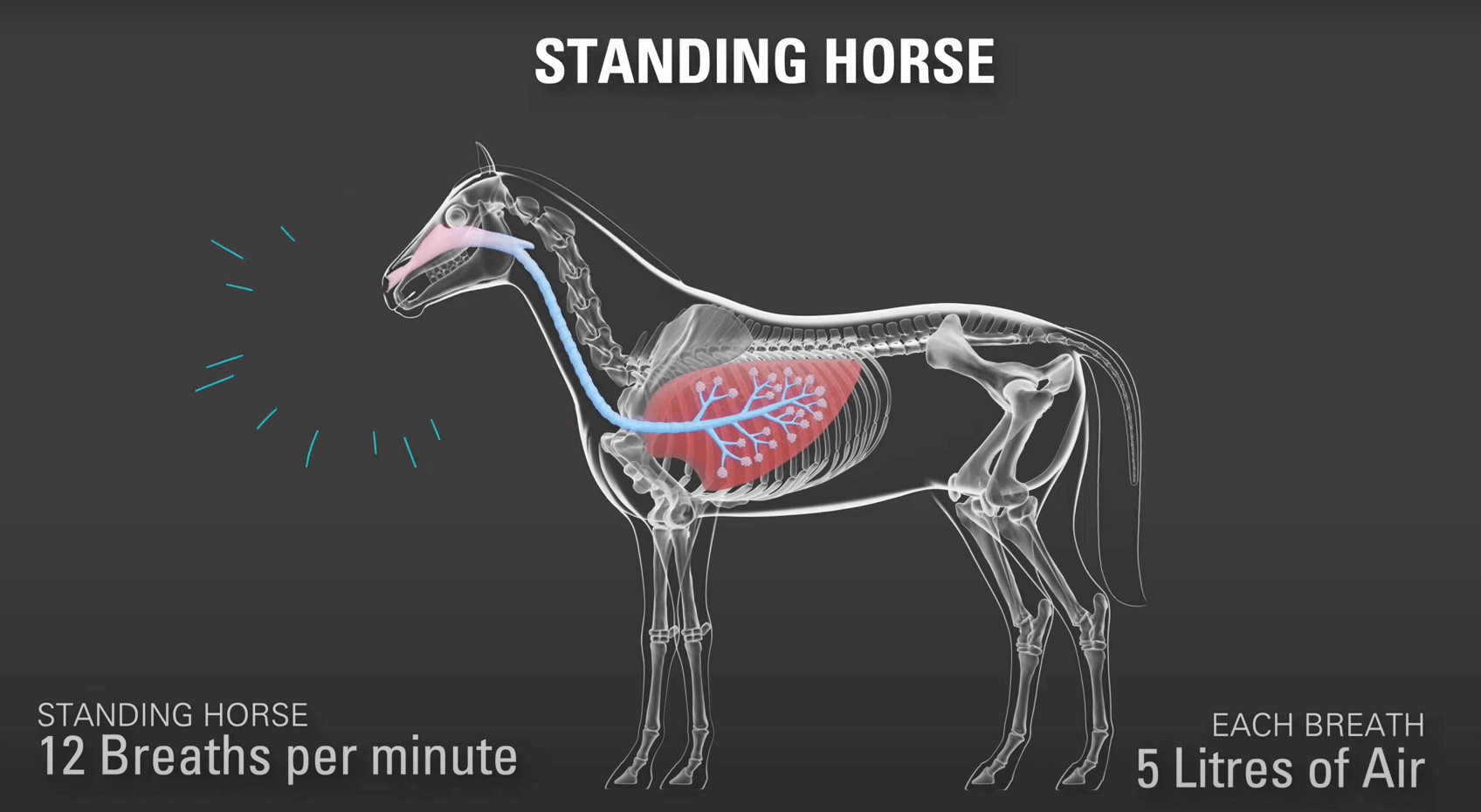
Your horse’s respiratory system consists of airways and lungs, forming a complex network. As your horse breathes, air travels through the trachea, bronchi, bronchioles, and eventually reaches alveoli, where oxygen enters the bloodstream, and carbon dioxide exits. Visualize this system as a tree, with the trachea as the trunk, bronchi as branches, bronchioles as small branches, and alveoli as leaves.
The primary purpose of this system is to supply oxygen to the body and remove carbon dioxide, a byproduct of cellular activity.
The Significance of Maintaining Respiratory Function
Unlike humans, whose respiratory systems are designed for speech, a horse’s respiratory system is optimized for athletic performance. During exercise, a horse can increase its air volume intake tenfold, with an impressive maximum oxygen intake of 180ml/kg/min, compared to humans’ 80ml/kg/min.
Despite these capabilities, the respiratory system often limits a horse’s performance, with many experiencing hypoxia (low oxygen levels) during exercise. Even minor compromises to respiratory function can have a significant impact on performance.
Normal Limitations in the Horse’s Respiratory System
Horses are obligate nasal breathers, meaning they can only breathe through their nose, even during strenuous exercise. Additionally, their breathing is synchronized with their stride at a canter and gallop, making it impossible to increase their respiratory rate without shortening their stride.
Factors That Can Compromise Respiratory Function
Several common respiratory conditions can affect your horse’s respiratory system:
Physical Abnormalities in the Upper Airway: Conditions like laryngeal paralysis and dorsal displacement of the soft palate can narrow the airway. Surgical options may be considered to address these issues if they impact your horse’s health or performance.
Recurrent Airway Obstruction (RAO): Also known as equine asthma or previously as COPD, RAO is caused by allergic reactions to environmental irritants, resulting in increased mucus production and airway constriction. Coughing is a common sign. Improving ventilation and reducing exposure to allergens is crucial. This is quite common in horses in the Middle East due to the dry, dusty conditions. Consider using products like Airvent Syrup & Gel, our equine respiratory supplement to aid breathing.
Exercise-Induced Pulmonary Hemorrhage (EIPH): EIPH, or “bleeding,” occurs in the lungs during exercise. While often not apparent, it can lead to poor performance, coughing, nosebleeds, and more. It is commonly seen in young thoroughbreds and in training and in endurance horses as they are under intense training programmes for racing in the GCC region. Rest is essential for healing, and products like Zosfor, another equine respiratory product in our range can help support respiratory and blood vessel health.
Respiratory Infections: Viral infections like equine influenza and equine herpes can spread rapidly among horses. Bacterial infections, including strangles and pneumonias, are also concerning. Vaccination and rest are key for recovery. Parasites such as lungworm and Parascaris equorum can pose risks, so consult your vet for an appropriate worming protocol. Our Honey C is a vitamin C supplement for horses in a syrup format that can support immune and respiratory function during times of stress or illness. It contains Vitamin C, which is a powerful, proven respiratory antioxidant for horses.
For more information on supporting your horse’s respiratory health, contact the Foran Equine Team.
References:
- Mazan M. Equine exercise physiology-challenges to the respiratory system. Anim Front. 2022 Jun 14;12(3):15-24. doi: 10.1093/af/vfac035. PMID: 35711503; PMCID: PMC9197307.
- McGilvray TA, Cardwell JM. Training related risk factors for exercise induced pulmonary haemorrhage in British National Hunt racehorses. Equine Vet J. 2022 Mar;54(2):283-289. doi: 10.1111/evj.13448. Epub 2021 May 9. PMID: 33843093.
Related Nutritional Articles

Best Supplements for the Dressage Horse
Best Off-Season Supplements for Horses
Your Nutri-Gard Questions Answered
Contact our sales team via WhatsApp or email


Mohammad Agha
Senior Sales Consultant, Arab Markets
Based in Kuwait, Mohammad Agha serves as the Senior Sales Consultant for Connolly’s RED MILLS Group, representing a prestigious portfolio of products including Connolly’s RED MILLS horse feeds, Foran Equine Supplements, and Carr & Day & Martin Equine care products across the Arabian markets.