

 Where to Buy
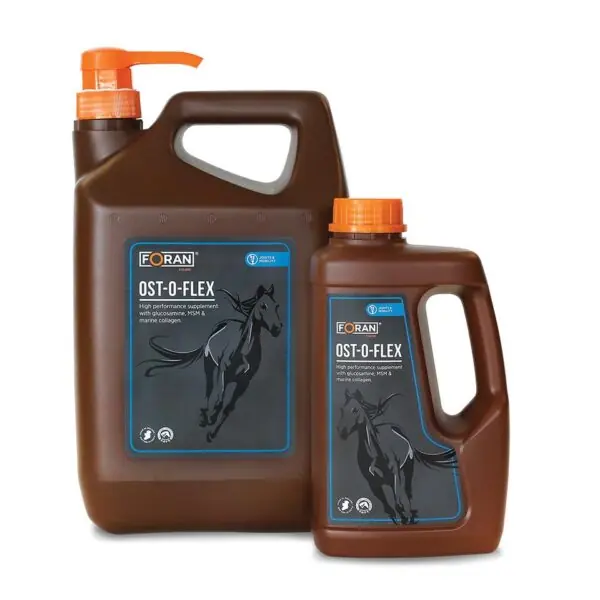
Ost-O-Flex
An effective combination to support mobility and joint function
View Product
When it comes to selecting a joint supplement, horse owners can make the best choice by understanding their horse, conducting thorough research, and comparing supplement content and claims.
Vital for any horse’s training routine is maintaining the horse’s health and fitness while ensuring their soundness. Joint health plays a crucial role in the performance of equine athletes, as strong and stable joints are essential to maximize their capabilities, crucial for growth, strength and long-term soundness.
High-level competition and the natural wear and tear associated with aging can have detrimental effects on a horse’s joint health. Occasionally, severe joint injuries, such as joint infections or severe osteochondrosis (OCD), can lead to rapid deterioration in joint health. Joint issues can manifest as stiffness, reduced performance, shortened stride, swelling, and noticeable lameness.


Joints serve as robust and mobile skeletal areas where two bones meet. Articular (joint) cartilage covers the ends of each bone, while synovial (joint) fluid fills the joint space, with cartilage acting as a shock absorber and synovial fluid as a lubricant. Cartilage, created by chondrocytes, consists of water bound to glycosaminoglycans (GAGs) and sturdy collagen connective tissue. A fibrous joint capsule surrounds the joint, providing isolation and structural support. While cartilage is resilient, it lacks the ability to repair quickly if damaged, making joints susceptible to degeneration when the pace of damage surpasses the repair process. This degeneration leads to inflammation, further exacerbating the deterioration. The hard ground conditions in the Middle East can predispose horses to excessive joint wear and tear.
Horse owners often grapple with deciding on appropriate interventions for their horses. If your horse experiences clinical or persistent lameness, it’s advisable to have a veterinary surgeon investigate potential underlying causes. Advanced techniques like joint injections, biological anti-inflammatories, and stem cell therapy can be offered by veterinary surgeons after thorough examinations. However, these anti-inflammatory treatments may mask the pain associated with joint issues without addressing the underlying joint degeneration. Given the importance of joint health for sport horses and the impact of lameness on performance, it’s no surprise that there are numerous experts dedicated to researching, diagnosing, treating, improving, and preventing joint injuries.
Over-the-counter joint supplements for horses are gaining popularity, serving as complementary options to veterinary therapeutics, owner interventions, or preventive measures for young competing horses. Supplementing to maintain joint health can enhance performance and extend the athletic life of horses. There is a wide array of products available, so horse owners should educate themselves about the various offerings and their compositions.
Typically, equine joint supplements include various ingredients, such as glucosamine, chondroitin sulfate, hyaluronic acid, MSM, Vitamin C, or Omega-3. These components are further elaborated on below.
Glucosamine acts as a precursor to the disaccharide unit linked to glycosaminoglycans (GAGs), which are integral to cartilage’s core structure. Good absorption of glucosamine from the intestine is believed in horses.
Chondroitin sulfate is the principal glycosaminoglycan (GAG) in joint cartilage, providing structure and cushioning. It is derived from shark or bovine cartilage and may be listed as “marine collagen” or “fish bone meal” in supplement compositions.
Hyaluronic acid (HA) is a large molecule composed of linked glucosamine molecules that attract and bind water. It’s present in joint cartilage and concentrated in synovial (joint) fluid, where it lubricates the joint.
MSM serves as a sulfur source, used for disulfide bonds that cross-link collagen strands and strengthen cartilage. Sulfur is also essential for the body’s production of chondroitin sulfate.
Vitamin C plays a critical role in collagen and cartilage formation and serves as an antioxidant that neutralizes free radicals.

Omega-3 is an essential fatty acid (EFA) found in fish oil, linseed oil, and Karron oil. Omega-3 EFAs are valued for their anti-inflammatory effects when included in the diet. Human studies have shown improvements in arthritis with Omega-3 supplementation.
Foran Equine’s Ost-O-Flex is a specially formulated equine joint supplement in syrup format designed to meet the needs of equine athletes. It contains Glucosamine, MSM, and a bioavailable source of Calcium, Chondroitin Sulfate, and Hyaluronic Acid, contributing to joint mobility and health.
When selecting an equine joint supplement, a deep understanding of your horse and diligent research are your allies. Take the time to compare product ingredients, their concentrations, and recommended daily allowances. Investigate the claims related to the listed ingredients on the product. With careful management of training, competition, treatment, and diet, horses with joint issues can continue to perform and compete successfully.
For any inquiries about supplements or equine nutrition, reach out to our expert team.




Senior Sales Consultant, Arab Markets
Based in Kuwait, Mohammad Agha serves as the Senior Sales Consultant for Connolly’s RED MILLS Group, representing a prestigious portfolio of products including Connolly’s RED MILLS horse feeds, Foran Equine Supplements, and Carr & Day & Martin Equine care products across the Arabian markets.