

 E-Store
 Where to Buy
Coughing in Horses: Causes, Symptoms and When to Call the Vet
All horses cough occasionally, for example, if they get a bit of debris in their airways, whilst eating or drinking or at the start of exercise “to clear the throat”. In these situations, coughing is just a normal sign of a healthy airway keeping itself clean. However, beyond this, why do horses cough? And what Can you do about it?
When is a cough a problem for my horse?
A cough indicates that there is irritation in the horse’s respiratory system. There are many different possible underlying causes of a cough, and asking yourself a few questions can help determine the cause:
- How long and how often is my horse coughing?
- Is the cough dry, or accompanied by nasal discharge?
- Are there other horses on the same premises coughing?
- Has my horse just eaten?
- Has my horse recently travelled?
- Does my horse have other clinical signs?
How long and how often is my horse coughing?
An occasional cough is usually nothing to worry about, but if the coughing persists or is accompanied by other signs, this can be indicative of a more serious respiratory problem.
Is the cough dry, or accompanied by nasal discharge?
A dry cough means there is no phlegm, whereas discharge from the nose indicates excess mucus or phlegm is being produced as part of the respiratory condition.
Are there other horses on the same premises coughing?
A whole yard or barn of horses coughing is most likely due to an infectious agent which is being transferred from horse to horse, such as a respiratory virus. One horse coughing on its own, in a yard setting, suggests the problem is not infectious.
Has my horse just eaten?
Food material may have irritated the airway, especially conserved forages if they are dusty. Sudden onset coughing after eating, accompanied by neck spasms, nasal discharge (with food material) and often signs of pain and distress, can be a sign of choke. This is when food gets stuck in the horse’s oesophagus. Whilst not a respiratory condition, it can be a very scary experience, and it can cause aspiration of saliva and food material in to the lung, causing a potential pneumonia in later days. If you suspect your horse is suffering from choke DO NOT PANIC! Remove all food sources (including edible bedding) and water from the horse and then call your vet for further advice.
Has my horse recently travelled?
A cough that occurs after travel should be investigated by your vet, especially if coupled with any other symptoms such as lethargy and/or fever. It may be that the horse has picked up a viral infection from another horse at an event or during transport. Another possibility is Shipping Fever (bacterial pneumonia), which affects horses that have travelled long distances (see below for more details).
Does my horse have any other clinical signs?
If the cough is occurring along with other symptoms, such as lethargy, inappetence, increased temperature or reduced performance, you need to call your vet for further investigation.
When does the cough tend to occur?
Is it when the horse is exercised or stabled or at a specific time of year? Identifying when your horse coughs most may help identify the underlying cause.
What will my vet do to diagnose the cause of my horse’s cough?
A persistent cough, or one accompanied by nasal discharge, dullness or inappetence, a high temperature, reduced performance, or that has affected several horses on the same premises should always be investigated by your vet. A full investigation may include
- Listening to your horse’s chest
- Blood work
- Nasal swabs
- Endoscopic examination
- Tracheal or lung washes
- Ultrasound
These tests are used to help reach a conclusive diagnosis to decide the most effective treatment plan.
What can cause a cough in my horse?
Some common causes of coughing in horses include:
- Equine influenza
- Equine herpes virus
- Strangles
- Recurrent airway obstruction
- Exercise induced pulmonary haemorrhage
- Lungworm
- Shipping fever
- Ascarids
- Rhodococcus equi
Equine influenza:
Despite vaccination, influenza (flu) infection is still a common cause of respiratory infections and coughing in horses. Influenza is caused by a virus and spreads rapidly through a yard to all horses stabled together. Influenza is usually accompanied by an elevated temperature, along with reduced appetite. For unvaccinated horses, influenza infection can be prolonged and even life-threatening.
Equine herpes Virus (EHV):
A cause of coughing and clear nasal discharge in young horses. This virus can spread quickly to all previously uninfected horses in the yard. It is usually a mild infection, although it can cause elevated temperatures and reduced feed intake. Vaccination can reduce the incidence of EHV in a yard.
Strangles:
This is one of the most common causes of respiratory infections in horses and is caused by the highly infectious bacteria Streptococcus equi. Strangles transfers rapidly through contaminated exudates such as nasal discharge to all horses in a yard. The typical signs are increased temperature, reduced appetite, nasal discharge, coughing and swollen lymph nodes (glands). Often the swollen glands will burst and release pus onto the skin.
Recurrent airway obstruction (RAO):
Also known as equine asthma, heaves or chronic obstructive pulmonary disease (COPD), this is a common cause of coughing in older horses. It is caused by an allergic reaction in the horse’s lungs to irritant particles found in the environment, such as dust, fungal spores or pollens. This allergic response results in increased mucus production and a reduction in the diameter of the airways, thus predisposing the horse to coughing. Equine asthma is not transmitted between horses and affected horses will show abnormal respiratory signs, even at rest. However, in young horses it is known as inflammatory airway disease (IAD), and is often associated with poor performance, exercise intolerance and an intermittent cough – these horses are usually normal at rest.
Exercise induced pulmonary haemorrhage (EIPH):
Most commonly seen in racehorses. The majority of EIPH affected horses do not have a bloody nasal discharge, but coughing is common as the horse attempts to clear the blood from its airways.
Read more about EIPH.
Lungworm:
An infection of the lower respiratory tract, usually resulting in bronchitis or pneumonia, caused by the parasitic roundworm Dictyocaulus arnfieldi. Horses are not a primary host for lungworms, so it is usually only seen in horses grazed with donkeys.
Shipping Fever:
Shipping fever is a bacterial pleuropneumonia which can occur when the horse is unable to drop its head for lengthy periods of time and therefore cannot clear mucus, dirt and debris from their airways (e.g. if tied-up during long-distance transport). Shipping fever, if left untreated, can be life-threatening.
Ascarids:
Usually only a problem in horses less than three years old. These equine roundworms (Parascaris equorum) emerge in the gut before migrating to the lungs where they cause considerable inflammation. Older horses develop resistance to the roundworms, so they are not usually a cause of coughing in mature horses.
Rhodococcus Equi pneumonia:
Rhodococcus equi is a bacterium that inhabits the soil and can
cause pneumonia in foals aged 1 to 6 months. Foals acquire the disease by inhaling pathogen-laden
dust particles. Once Rhodococcus equi is established in the soil, it is almost impossible to eradicate it
and it will remain a threat to future generations of foals.
What treatments are available for my coughing horse?
As a cough can have many underlying causes, there are a wide range of treatments available. A coughing horse will often require rest, and a good rule of thumb for horses affected by influenza, herpes or strangles is to give them two days rest for every day of coughing. However, you should discuss this with your vet, as riding your horse too soon, when the airways have not fully recovered, may be detrimental. Your vet will also determine if your horse needs any prescription drugs, such as anti-inflammatories or antibiotics.
Can I prevent coughing in my horse?
Certain management changes will help minimise the risk of respiratory disease:
- Keep up to date with vaccinations and worming – speak to your vet for advice
- Try to reduce the dust in your horse’s environment as much as possible – ensure ventilation is adequate in the stable, only use dust free bedding and consider soaking or steaming hay to reduce the risk of fungal spores being inhaled.
- Daily turn out, or even living out 24/7 is best for most horses prone to respiratory problems. However, certain pollens can be a trigger for some horses suffering from equine asthma and may worsen their condition if they are turned out. Consequently, it may be necessary to avoid turning out these individuals during times of high pollen count/poor air quality
- Good hygiene on yards – always isolate a horse that suddenly starts coughing until an infectious cause can be ruled out. Monitoring rectal temperatures can also help to identify problems early
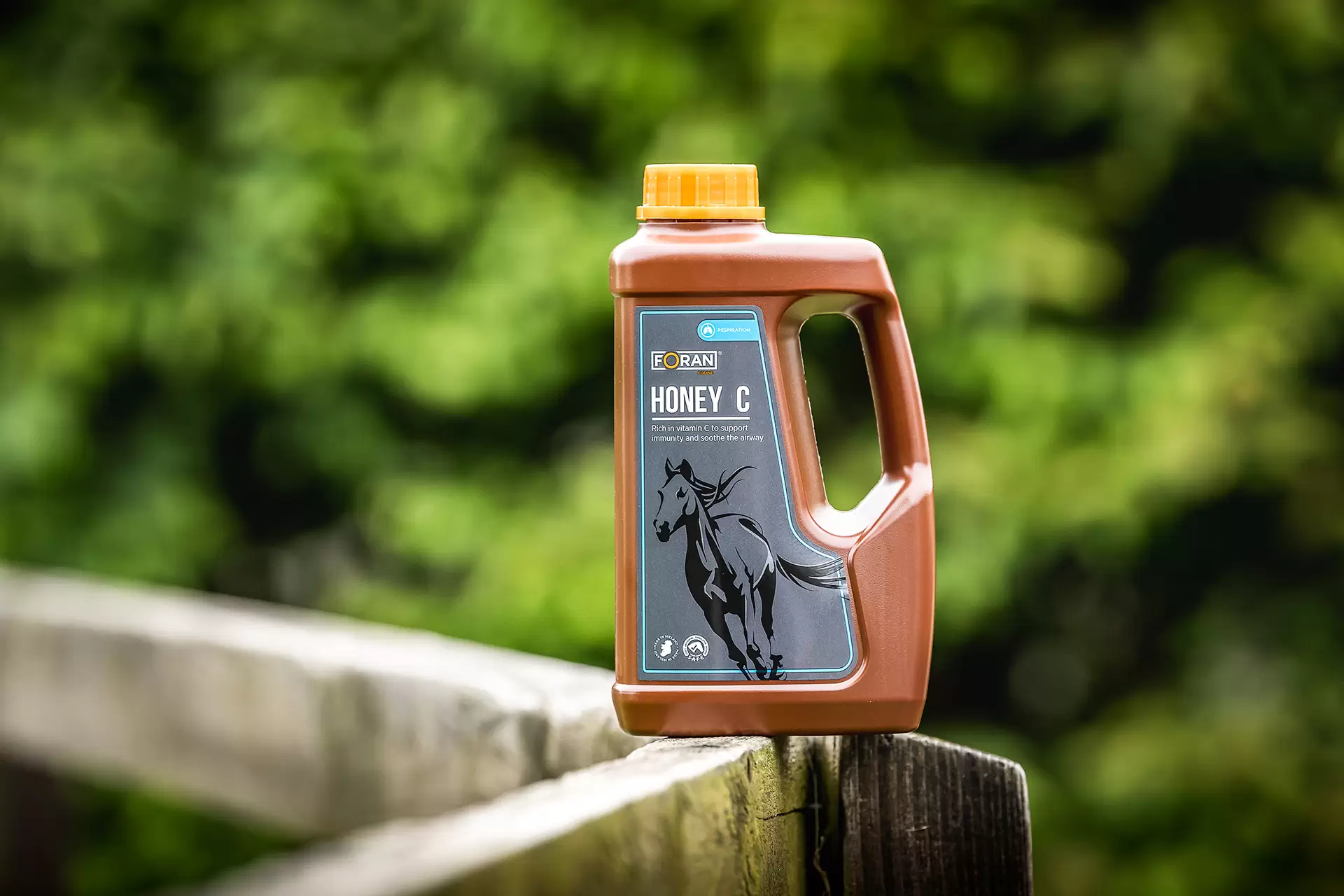
Adding a scientifically formulated supplement to help support and maintain your horse’s respiratory health can also be beneficial. Airvent Syrup & Gel contains Vitamin C to help maintain immune and respiratory function, as well as naturally soothing honey, peppermint and eucalyptus to help open the airways for easier breathing. Honey C is a palatable syrup combining the natural soothing effect of honey and Vitamin C, to help maintain immune and respiratory function, plus thyme, liquorice, and horehound – all herbs that are renowned for their respiratory system supportive properties. It can help to support respiratory health, particularly during times of stress or illness. For high performance horses, Zosfor is designed to support respiratory and blood vessel health, with the natural super-antioxidant bioflavonoid hesperidin, Vitamin C to support healing and Vitamin K, an essential factor for blood clotting. Although horses can synthesise their own Vitamin C research has shown that supplementation can further increase levels in the horse, proving especially useful if disease or additional stresses are present.
If your horse is displaying any signs of respiratory problems, we recommend that you seek veterinary advice to address any underlying conditions before adding any respiratory supplement to you horse’s diet.
If you have any queries on this issue or any other problems you may be having with your horse please contact the Foran Equine team who will be happy to help you.
References:
Deaton, CM. Marlin, D,J. Roberts, CA. Smith, N. Harris, PA. Kelly, FJ. And Schroter, RC. Antioxidant supplementation and pulmonary function at rest and exercise. Equine Veterinary Journal Supplement. 2002 Sep;(34):58-65
Related Nutritional Articles

NUTRI-CALM LIQUID vs NUTRI-CALM GEL

Competition Day Energy & Recovery for Horses
Your PRE-FUEL & RE-FUEL FAQs: Energy, Performance & Recovery